Pet Odor Removal
Home ♦ Pet Odor Removal
Home ♦ Pet Odor Removal
It’s all fun and games until the valuable oriental rug in the den gets a pet urine stain that’s not coming out. Pet urine is at the top of the “uh oh” chart of rug disasters. The stains are usually permanent. But if the field has a busy design that might not be a big issue. The odor though… well, that IS a lingering issue, and the longer that urine sits in those rug fibers, the worse of an issue it’s going to become to the rug and the floor.
First things first… you need to remove the source of the odor, so the urine needs to come out of the middle of that rug. Woven rugs are often constructed with wool knots wrapped around cotton warps and wefts (the foundation fibers).
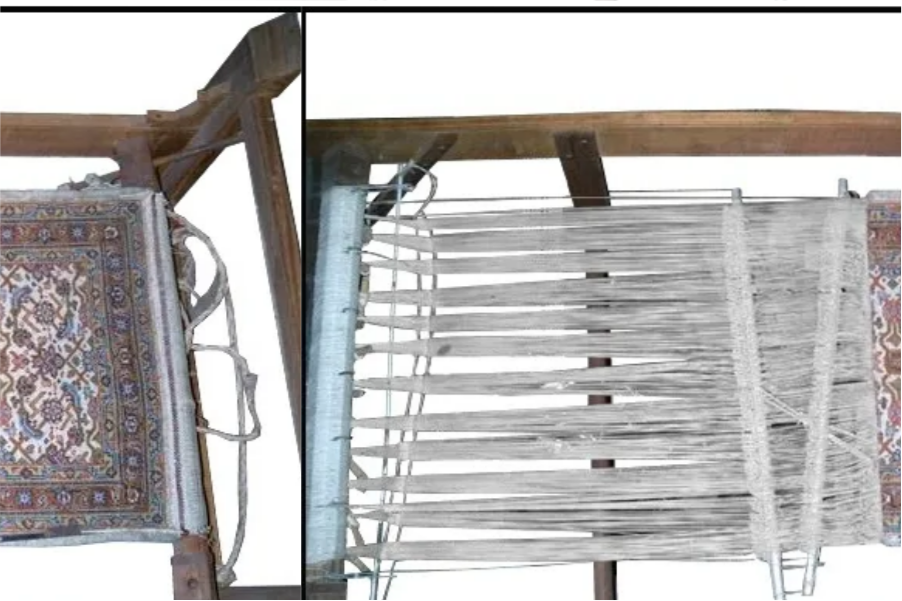
Cotton, as you know, is absorbent. This is why we use cotton towels to wipe things up – they pick up moisture. So when warm pet urine hits a rug, it will be suspended for a short time (because wool has a natural repellency to moisture) and then it will penetrate the wool fibers and be pulled into those cotton fibers. This is why when you see a urine stain on a rug, you know you are only seeing the tip of the iceberg. There is a larger amount of urine inside that rug than you are seeing.

With rugs, removing the odor source means you are going to have to wash it out. You cannot surface clean an oriental rug with a truck mount or portable and remove the odor causing elements from the inside foundation fibers. It just does not work that way. And trying to cover up is just incomplete work. A heavy fragrance deodorizer is going to just make it worse. It’s like spraying Lysol in a Port-a-Potty… floral smelling sewage ain’t going to cut it on this one.
The most thorough way to get to the odor-causing contaminants out of woven rugs is to WASH the rugs. Quick FYI: “woven” rugs are rugs where you can see the design on the back the same as on the front, like this:

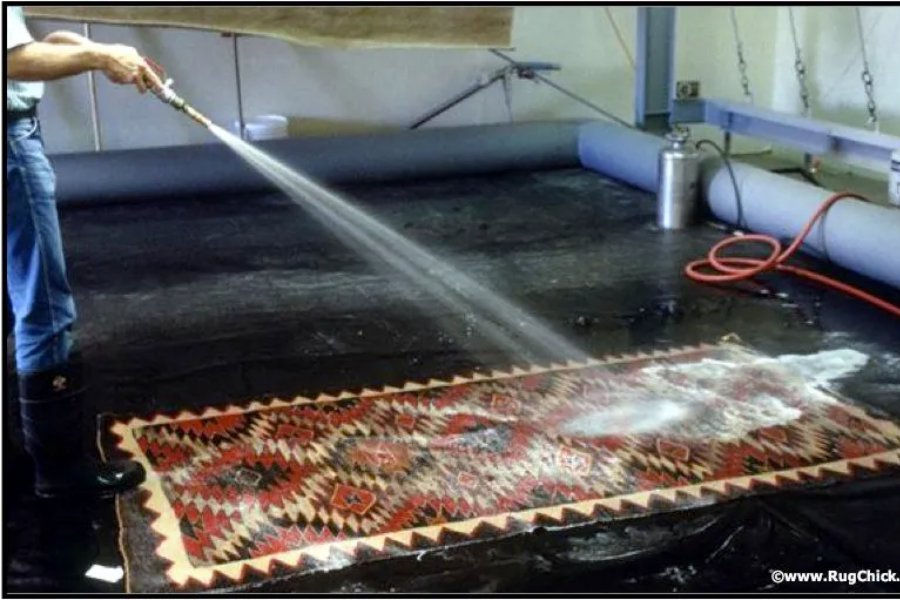
Removing the source means washing it out. This is what Elegant Services rug cleaning facilities do. We clean the rug in a wash pit, or on our larger wash floor, we WASH the rugs clean.
1.STAINS
Pet urine stains are often permanent, especially if they have been there for awhile. Sometimes chemical stain removers can be used to try to strip out the yellow urea staining, but this will create damage to the fibers as a result (all bleaching and stripping agents cause fiber damage).
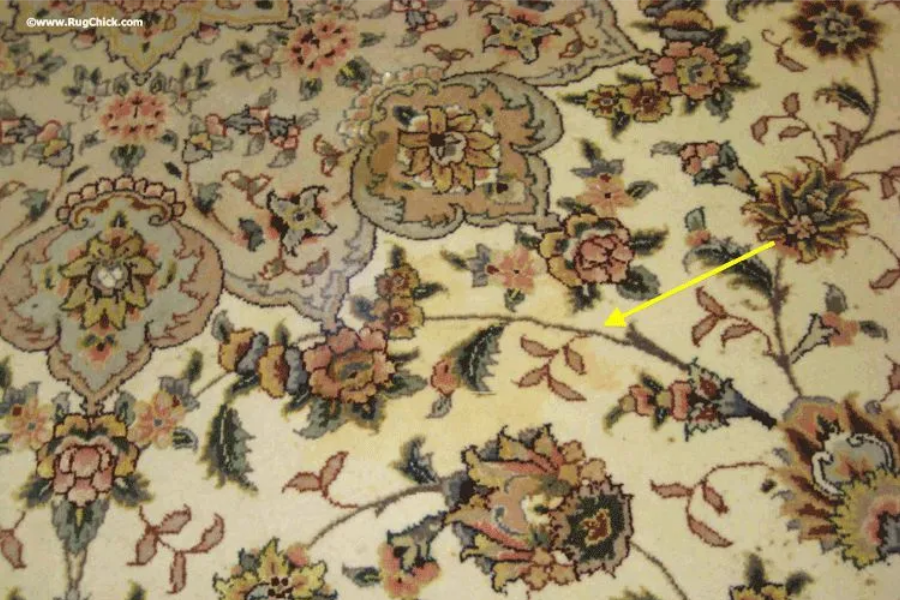
This stain is likely permanent, and with that being the case, Careful consideration should be taken when investing in having the rug professionally cleaned by Elegant Services. If the stained area improves during the wash, then that’s great. Elegant Services cannot guarantee anything besides that we will try your very best, especially if you (the rug owner) already tried a bunch of over-the-counter “miracle” stain removers before. You likely have “set” the stain worse in the panic.
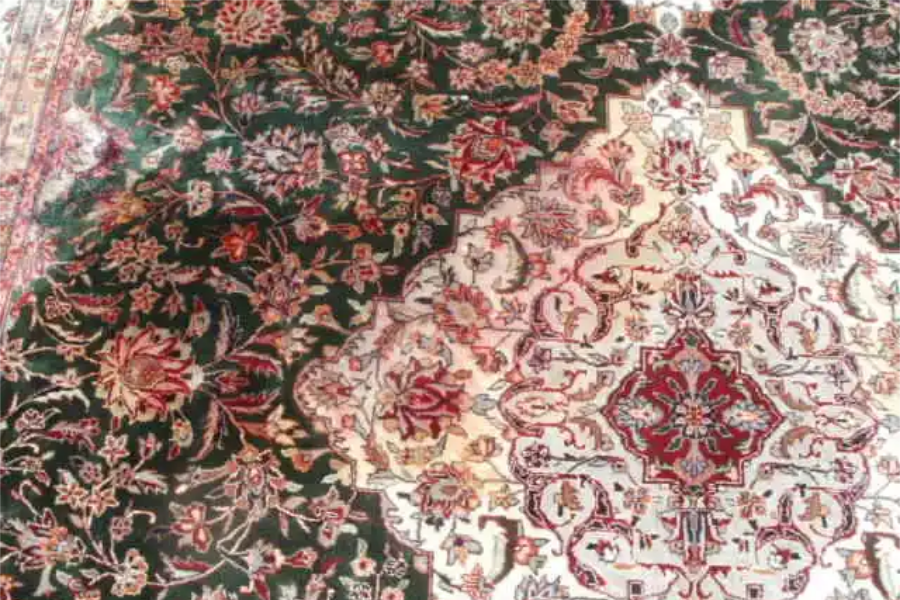
Even very colorfast dyes on a wool or silk rug can bleed with longterm exposure to pet urine. Over time pet urine stains shift from acidic to alkaline. The problem with alkalinity is that it can cause serious damage to acid rug dyes, and those areas can release and bleed the color.
Red dye bleed on a silk rug from pet urine.
This alkalinity problem is the same one that creates dye bleeding problems for on-location carpet cleaners who use their carpet cleaning machines and solutions (which tend to be alkaline because they are meant for synthetic wall-to-wall carpeting) on natural fiber rugs. This mix often creates disasters.

The worst danger from long-term, repeated exposure to pet urine is that the cotton foundation fibers start to mildew, and begin to become rotten from dry rot. Dry rot is not correctible. In worst case scenarios, usually seen from plants on top of rugs where moisture slowly rots the rug away, this creates large holes as a result. This rug had a pot sitting along the end, and the owner never knew she was harming her rug:

This is the quickest way to get most of the water out of the rug, plus there is the added advantage of it “ironing” out the rug so that it is very flat and even during the final drying process. This “Squeeze” will ensure the last of the impurities are removed.